
Key Details / TL;DR
Plan an adult birthday by choosing a format (dinner, drinks, activity, or party), inviting to fit your space and budget with 2–4 weeks' notice, matching food to the time of day, and prepping ahead so you can enjoy it.
Adult birthday parties are easy to overthink. A good one comes down to a clear idea, the right people, and enough planning that you can actually enjoy it.
Pick a format
Decide the vibe first: a dinner, a drinks gathering, an activity (bowling, a class, a day out), or a bigger party at home or a venue. The format sets everything else — budget, guest count, and food.
Guest list and invites
Invite to fit your space and budget, and give two to four weeks’ notice (more for a big or weekend event). Ask for RSVPs so you can plan quantities.
Food, drinks, atmosphere
Match food to the time of day, offer good non-alcoholic options, and let lighting and music do the heavy lifting on atmosphere. Self-serve stations keep you out of the kitchen. For larger gatherings, consider catering.
Keep it low-stress
Prep ahead, keep a loose run of show, and delegate a couple of tasks. The point is to celebrate, not to cater your own event into exhaustion. Our party planning guide has the full framework.
Format ideas by vibe
If you are stuck on format, start from the feeling you want. Low-key and warm: a dinner at home or a booked table. Social and celebratory: drinks with nibbles and a playlist. Memorable and active: a shared experience — a class, a tasting, bowling, karaoke, or a day out. Milestone: a bigger party at a venue with catering. The format decides budget, guest count, and effort, so pick it first.
The small things that make it feel special
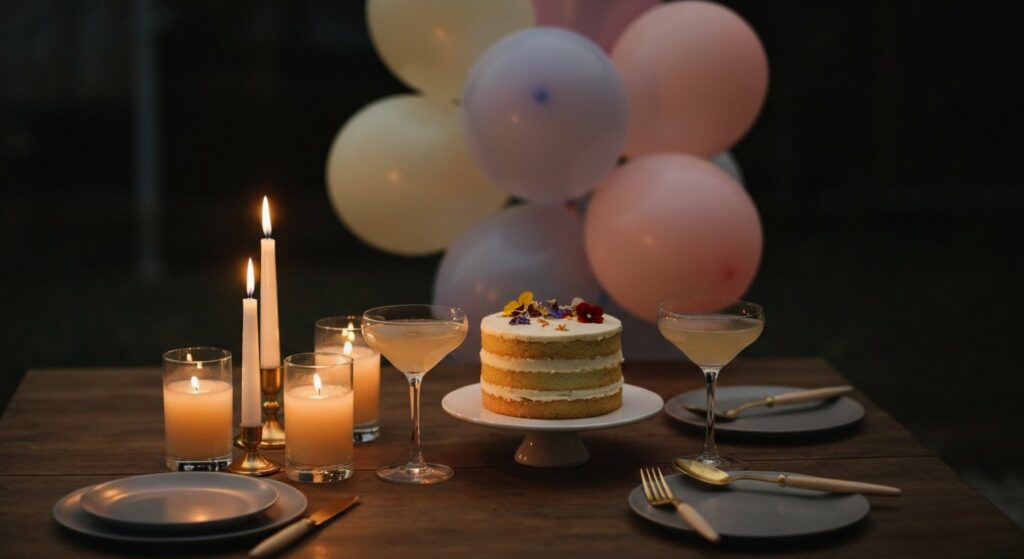
Adults notice atmosphere over decoration: good lighting (lamps and candles beat overhead glare), a thought-through playlist, a signature drink, and a host who is relaxed and present. One or two personal touches — a favourite cake, a shared toast, a photo corner — do more than a room full of props.
Stay out of the kitchen
Prep everything you can the day before, choose food that holds (grazing boards, make-ahead dishes, or catering for larger groups), and set up self-serve drinks. The goal is to celebrate, not to spend your own birthday plating canapés. Our party planning guide has the full framework.
Format ideas by vibe
If you are stuck on format, start from the feeling you want. Low-key and warm: a dinner at home or a booked table. Social and celebratory: drinks with nibbles and a playlist. Memorable and active: a shared experience — a class, a tasting, bowling, karaoke, or a day out. Milestone: a bigger party at a venue with catering. The format decides budget, guest count, and effort, so pick it first.
The small things that make it feel special
Adults notice atmosphere over decoration: good lighting (lamps and candles beat overhead glare), a thought-through playlist, a signature drink, and a host who is relaxed and present. One or two personal touches — a favourite cake, a shared toast, a photo corner — do more than a room full of props.
Stay out of the kitchen
Prep everything you can the day before, choose food that holds (grazing boards, make-ahead dishes, or catering for larger groups), and set up self-serve drinks. The goal is to celebrate, not to spend your own birthday plating canapés. Our party planning guide has the full framework.
Building a realistic budget
Before you fall in love with a big idea, it helps to know roughly what you are willing to spend on this adult birthday party. A budget is about deciding where the money should go so the night feels generous in the places that matter. Start by listing the likely cost areas — venue, food, drinks, cake, entertainment, decor, and any hire items — then rank them by how much each one shapes the guest experience.
For most gatherings, food and drink carry the atmosphere, so protect that part of the budget first. Decor and props tend to be where people overspend for the least return, so treat them as the flexible line you can trim. Build in a small buffer for the extras that always appear late on. If money is genuinely tight, scaling down the guest count or shortening the event usually saves more than cutting individual items, and it rarely dents the fun.
Choosing a venue: options, pros and cons
When you are working out how to plan a birthday party, the venue decision drives cost, effort, and mood more than almost anything else. Each option carries a trade-off, so weigh them against your format and guest list rather than defaulting to whatever feels easiest.
- At home: the most flexible and usually the most affordable choice. You control the timing, music, and food, and people tend to relax quickly. The downside is that you take on the setup and clean-up, and space can limit numbers.
- A restaurant or private dining room: low effort and reliably comfortable, with food and service handled for you. It suits dinners and smaller groups, though set menus and fixed timings give you less freedom, and per-head costs are higher.
- A bar or pub area: a sociable, low-commitment option that works well for drinks-led celebrations, and a reserved section keeps your group together. Noise and shared space can make it harder to gather everyone for a toast.
- Outdoors: a garden, park, or terrace can feel open and generous in warmer months. The catch is the weather, so always have a wet-weather fallback and think about seating and toilets.
- A hired space or function room: the natural choice for a larger or milestone party, giving you room to shape the event your way. It asks the most in planning and budget, and you may need to arrange catering and clean-up yourself.
Entertainment, music and activities
Adults rarely need wall-to-wall entertainment, but a little structure stops a party from drifting. Think of it in layers. The base layer is music: a considered playlist that starts gently as people arrive, lifts as the room fills, and eases off towards the end. Live music or a DJ can raise the energy of a bigger celebration, but a well-built playlist and a decent speaker carry most gatherings comfortably.
On top of that, a single anchor activity gives shy guests something to do and creates natural talking points. That might be a tasting, a quiz, garden games, or a group booking for something active. Keep it optional and light — the aim is to spark conversation, not run a timetable. A relaxed photo corner or guest book can also give people a gentle focus without any pressure to perform.
Theme and decor that suit adults
A theme is optional, but even a loose one makes decisions easier because it gives you a thread to follow for invitations, drinks, and decor. For grown-up parties, subtlety usually reads better than a full costume brief. A colour palette, a decade, or a single signature drink can be enough to tie the evening together without asking guests to dress up if they would rather not.
When it comes to decor, aim for a few well-placed touches rather than covering every surface. Group candles or greenery on a table, keep flowers simple, and focus on the entrance and main gathering point, since those are where people linger. Reusable and borrowed items keep costs and waste down. If you only do three things, focus on soft lighting, a tidy drinks station, and one memorable centrepiece.
A simple planning timeline
Spreading the work over a few weeks turns a daunting task into a series of small, manageable steps. Adjust the pace to the size of your event, but a rough countdown keeps you off the last minute.
- Around a month ahead: settle the date, format, and budget, draft the guest list, and lock in the venue or confirm you are hosting at home. This is also the moment to send invitations for a larger or weekend event.
- Two to three weeks ahead: chase RSVPs, plan the food and drinks, and book any entertainment, hire items, or catering. Order the cake now if it needs lead time.
- The final week: confirm numbers, shop for non-perishables, build your playlist, and tidy the space where you can.
- The day before: prep food that holds, chill drinks, and do the bulk of the decorating so the day is calm.
Day-of tips for a calmer host
On the day, your main job is to protect your own energy so you are present for the celebration. Give yourself a generous buffer before guests arrive, and get dressed early so you are not scrambling when the doorbell goes. Set out drinks and the first round of food before anyone arrives so the opening feels effortless.
Delegate a few clear tasks to willing friends — greeting arrivals, topping up drinks, or keeping an eye on the music — and accept help when it is offered. Keep a loose sense of the running order rather than a rigid schedule, and let the evening find its own rhythm. Above all, resist the urge to tidy as you go; a quick reset the next morning is a small price for staying in the moment on the night.
Frequently asked questions
How far in advance should I plan an adult birthday party?
For a casual gathering, a couple of weeks is often enough. For a larger or milestone celebration, or anything on a busy weekend, giving yourself around a month or more helps you secure a venue and gives guests time to commit.
How do I plan a birthday party on a tight budget?
Focus your spending on food, drinks, and atmosphere, and treat decor as the flexible line. Hosting at home, keeping the guest list smaller, and shortening the event all save money without hurting the mood. Borrowed items go a long way, and a great playlist costs nothing.
Do adult birthday parties need a theme?
Not at all, but a light theme — a colour, a decade, or a signature drink — can make planning easier and tie the evening together. Keep it optional so guests never feel obliged to dress up, and let the food, music, and company do most of the work.
How many guests should I invite?
Let your space, budget, and the vibe you want guide the number rather than a fixed rule. An intimate dinner might be a handful of people, while a bigger bash can fill a hired space. Always plan quantities around confirmed RSVPs rather than the full invite list.
