
Key Details / TL;DR
Plated service is formal, predictable, and staff-heavy; buffets are flexible, social, and usually cheaper but harder to quantify. Match the format to the formality, space, time of day, and budget.
One of the first catering decisions for any event is how guests will eat. Buffet and plated service create very different experiences — and costs.
Plated (served) meals
Guests are served a set menu at their seats. It feels formal and controlled, portions are predictable, and the room stays seated and calm. The trade-offs: it needs more service staff, usually costs more, and offers guests less choice.
Buffet
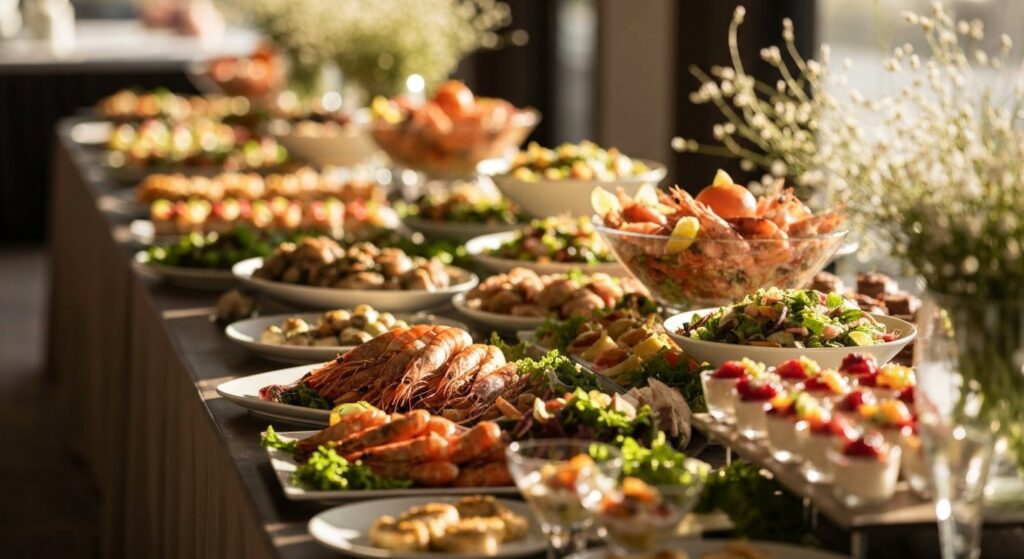
Guests serve themselves from a spread. It is flexible, social, and offers variety, and can be more relaxed. The trade-offs: queues if not laid out well, harder-to-predict quantities, and more food waste if over-catered.
Other formats
Family-style sharing platters split the difference — sociable but served to the table. Food stations and passed canapés suit standing receptions and encourage mingling.
How to choose
Match the format to the formality, the space, the time of day, and the budget. Whatever you choose, brief your caterer on headcount and dietary needs, and confirm whether staff, tableware, and equipment are included. See our full event catering guide.
What each format costs you — beyond money
Cost is only part of the choice. Plated service buys calm and control but needs more staff and a fixed menu chosen in advance. Buffets buy variety and a relaxed, social feel but need good layout (multiple stations to avoid queues) and careful quantities to avoid running short or over-catering. Family-style sharing sits between the two — sociable, but plated to the table.
Match the format to the moment
A formal evening wedding or a seated awards dinner suits plated. A relaxed reception, a casual celebration, or an event where mingling is the point suits a buffet or stations. Standing receptions and networking events are made for passed canapés and grazing tables, which keep people moving and talking.
Questions for your caterer
Whichever you choose, confirm what is included — service staff, tableware, linens, and equipment are often extra — and how they handle timing, replenishment, and dietary needs. Our full event catering guide walks through the whole decision.
Buffet vs plated catering: how to choose the right format
Choosing between a buffet and a plated (sometimes called “served” or “sit-down”) meal is one of the first catering decisions that shapes the feel, flow and cost of your event. Neither format is universally better — the right choice depends on your budget, your guest count, the formality you want, your venue, and how much you care about controlling timing. This guide walks through the trade-offs so you can decide with confidence and brief your caterer clearly.
A quick framework for deciding
Before comparing line by line, answer four questions. First, how formal is the event? A gala, a wedding reception or an awards dinner usually leans plated; a launch party, a family celebration or a casual reception leans buffet. Second, how tight is your budget per head? Buffets can lower food cost but not always total cost. Third, how important is a predictable timeline? Plated meals are easier to schedule around speeches and dancing. Fourth, how varied are your guests’ appetites and diets? Buffets give guests choice; plated meals give you control. If your answers point in different directions, the family-style and food-station hybrids below are worth a look.
Plated service: the case for a sit-down meal
With plated service, guests are seated and courses are brought to the table. It feels formal, calm and considered, and it is the natural fit for weddings, corporate dinners and any event with a program of speeches. Because portions are controlled, plated meals reduce food waste and make per-plate costs predictable. The trade-off is labour: plated service needs more waitstaff, a working kitchen or finishing space, and tighter coordination with the venue. Menus are usually more limited — often a single set menu with a couple of alternatives — so collecting guest choices and dietary needs in advance matters. Plated service also tends to keep guests in their seats, which is ideal when you want a captive audience for a toast but less lively if you want people mingling.
Buffet service: the case for self-service
A buffet lets guests serve themselves from a spread of dishes. It offers variety, it suits mixed appetites and diets, and it encourages a relaxed, social atmosphere as people get up, move around and return for seconds. Buffets can reduce the number of servers you need, and they forgive uncertain final numbers better than a plated menu. The downsides are real, though: queues can form at a single station, popular dishes can run low if quantities are miscalculated, and food sitting out needs careful temperature management. Buffets also invite over-plating, so the food quantity — and sometimes the total cost — can end up higher than an equivalent plated menu, even if the price per dish looks lower.
Where the money actually goes
It is a myth that buffets are always cheaper. Plated meals cost more in service labour but less in food volume, because portions are controlled. Buffets cost less in some service roles but usually require more total food (caterers prepare extra so nothing runs out) and more equipment: chafing dishes, warmers, serving utensils and a longer setup. When you compare quotes, ask each caterer to break the price into food, staff, rentals and service charge so you are comparing like with like. A buffet quote that looks lower per head can carry higher rental and food-volume costs once you add it all up.
Family-style and food stations: the middle ground
You are not limited to two options. Family-style service places large shared platters on each table, combining the warmth and abundance of a buffet with the seated comfort of a plated meal — though it needs bigger tables and adds food volume. Food stations spread themed counters (a carving station, a pasta bar, a dessert table) around the room, spreading out queues and turning the meal into an experience that keeps people moving and talking. Both hybrids can be excellent, but confirm your venue has the space and power for them and that your caterer is staffed to keep stations replenished and safe.
Staffing, timing and venue implications
Format drives logistics. Plated service needs enough staff to serve every table in close succession so no one waits with cold food; as a rough planning rule caterers assign more servers per guest for plated than for buffet. Buffets need attendants to replenish dishes, manage temperatures and keep the line moving. Timing differs too: a plated meal can be paced precisely around a program, while a buffet of any size takes time as guests queue, so build that into your run of show. Check the practical constraints early — kitchen access, power for warmers, floor space for a buffet line and its queue, and whether the venue restricts open-flame chafing fuel.
Matching the format to dietary needs
Guests with allergies or specific diets are handled differently in each format. A plated meal lets you pre-assign a safe, clearly identified dish to each guest who flagged a requirement, which many people with serious allergies prefer. A buffet offers more choice but raises cross-contamination risk from shared serving utensils, so clear labelling and separated dishes are essential. Whichever you choose, collect dietary information with your RSVPs and brief your caterer in detail — see our companion guide on catering for dietary restrictions for the full checklist.
Common mistakes to avoid
The usual regrets are avoidable: assuming a buffet will automatically save money without adding up rentals and food volume; underestimating buffet queue times for a large guest count; forgetting to plan for dietary needs until the final week; choosing plated service without confirming the venue has kitchen or finishing space; and skipping a tasting. Always taste the menu before you commit, confirm final numbers by your caterer’s deadline, and get the service style, staff count and what is included in writing.
Frequently asked questions
Is a buffet always cheaper than a plated meal?
No. Buffets can lower some service costs but usually need more total food and more rental equipment, so the total can equal or exceed a plated meal. Compare itemised quotes rather than headline per-head prices.
Which format is better for a large guest count?
Both work, but large buffets need multiple stations or double-sided lines to avoid long queues, and large plated meals need enough staff to serve everyone promptly. Discuss guest numbers with your caterer so they can scale staffing and stations appropriately.
What is best for a formal event?
Plated service generally reads as more formal and pairs well with a structured program of speeches, while buffets and stations suit relaxed, social gatherings.
Can we combine formats?
Yes. Many events use a plated main course with a dessert station, or family-style sharing platters with a separate drinks-and-canapés reception. Confirm space, staffing and cost with your caterer.
The bottom line: match the format to the moment
There is no single right answer in the buffet versus plated debate — only the right answer for your event, your guests and your budget. If you want a formal, precisely paced evening built around speeches and a controlled experience, plated service earns its higher labour cost. If you want a relaxed, sociable atmosphere with plenty of choice for a mixed crowd, a well-run buffet or a spread of food stations will serve you beautifully. Many of the most memorable events borrow from both worlds: a seated main course with a lavish dessert station, or a standing drinks-and-canapés welcome that flows into shared family-style platters.
Whichever route you choose, the fundamentals stay the same. Confirm your final guest numbers by your caterer’s deadline, collect dietary requirements early, taste the menu before you commit, and get the service style, staff count, rentals and every inclusion in writing. Walk the space with your caterer so the flow of food and guests is planned, not improvised. Get those basics right and the format almost takes care of itself — your guests will remember how the evening felt and how the food tasted, not the logistics that made it look effortless.
