
Key Details / TL;DR
A good networking event has a clear purpose, a curated guest list sized to the space, an environment designed for conversation (room to move, low music, easy food and drink), a loose run of show, and deliberate follow-up.
A networking event succeeds when the right people meet easily and leave glad they came. Whether it is a small mixer or a large industry evening, a little structure makes the difference between awkward and effective.
Start with the purpose
Decide what the event is for — introductions within an industry, connecting clients, welcoming new hires, or building a community — because it shapes who you invite and how you run the room. A clear purpose also gives guests a reason to show up.
Curate the guest list
Quality beats quantity. Invite a mix that has genuine reason to connect, and aim for a size the space can hold comfortably — a packed, too-loud room kills conversation as surely as an empty one. Send invitations with enough notice and ask for RSVPs so you can plan.
Design for conversation
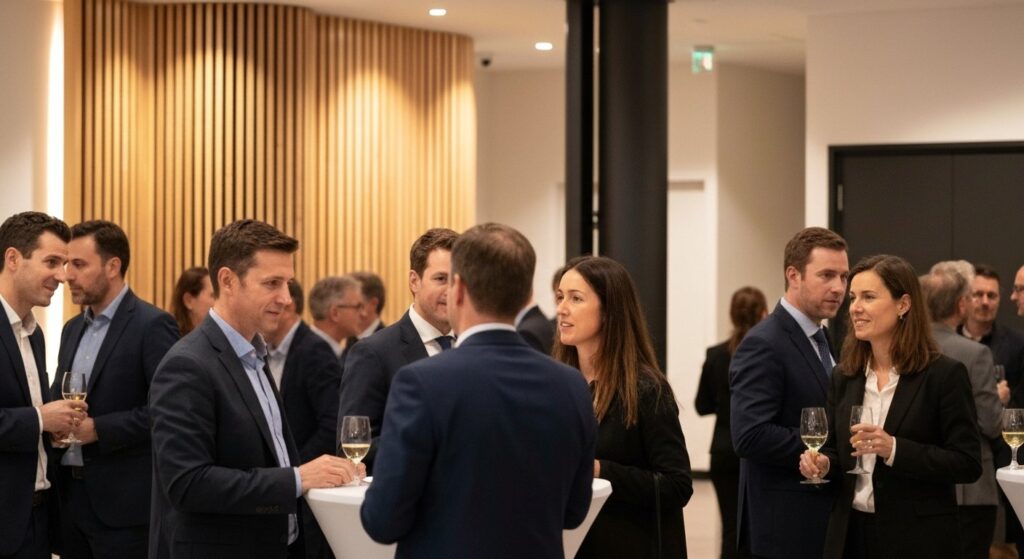
The environment does the work. Choose a venue with room to move and pockets to gather, keep music low enough to talk over, and provide easy food and drink so hands and small talk have somewhere to go. Name badges, a short welcome, or a light icebreaker help strangers start.
Give it a loose shape
Unstructured mingling suits some crowds; others benefit from a brief talk, a round of introductions, or facilitated groups. A simple run of show — arrival, welcome, mingling, an optional focal moment, wind-down — keeps energy up without feeling corporate.
Follow up
The value of networking is realised afterwards. Make it easy for guests to stay in touch, and follow up yourself with anyone you promised to connect. See our corporate event planning guide for the bigger picture.
Icebreakers that do not feel forced
Not everyone walks into a room and starts talking. You can lower the barrier without cheesy games: a short, warm welcome that names why everyone is there; name badges with a prompt (a role, an interest, a “ask me about”); a loose seating or standing arrangement that mixes people; and a host or two who deliberately introduce strangers to each other. Small nudges beat forced structure.
Getting the size and space right
The room makes or breaks a networking event. Too big and it feels empty; too small and no one can move or hear. Aim for a space your expected crowd fills comfortably with room to circulate, keep music low enough to talk over, and give people something to do with their hands — easy food and a drink — so conversation has a natural prop.
The follow-up is the point
Connections made at an event are only worth what happens next. Make it easy for guests to stay in touch, share a simple recap or attendee resource if appropriate, and follow up yourself with anyone you promised to connect. See our corporate event planning guide.
Choosing a format that fits your goal
Before you book anything, decide what shape the evening takes, because the format quietly sets the tone for every conversation that follows. A few options tend to work well when you are planning a networking event, and each suits a different crowd. An open mixer is the simplest: people arrive, drink, and mingle freely, which suits confident attendees who already know how to work a room. A panel-plus-networking format pairs a short discussion with mingling afterwards, giving quieter guests a shared topic to open with. Roundtables seat small groups around themed questions, which is ideal when you want depth rather than a scramble of business cards. Speed networking rotates people through brief, timed one-to-ones and guarantees everyone meets several others, though it can feel brisk. A workshop format has guests solve something together, and shared effort often builds warmer connections than small talk ever will.
You do not have to pick just one. Many hosts blend a focal moment with free mingling, and the right combination usually depends on how well your guests already know each other.
Laying out the room so people actually talk
Once you know the format, think about how the space channels movement. A room that looks tidy on paper can still leave people stranded, so plan the layout around conversation rather than tidiness. Create a few natural gathering points — a drinks station, a food table, a couple of tall poseur tables — and space them apart so guests drift between them instead of clustering in one corner. Leave clear walkways so no one feels trapped or blocked, and avoid long rows of chairs, which tend to freeze people in place.
Give thought to where the entrance leads. If arrivals walk straight into a wall of strangers, many will hover near the door, so position a host and the first drink somewhere that gently pulls people inward. A mix of standing space and a few seats works well: standing keeps energy up and makes it easy to move on politely, while a handful of seats offers a rest for anyone who needs it. Lighting matters too — warm and bright enough to read a name badge.
Helping introductions actually happen
Even a well-designed room benefits from a little human facilitation. The most useful thing you can do is brief one or two people to act as connectors whose job is to spot someone standing alone and introduce them to a group. A good introduction includes a reason to talk: mention what two people have in common, then step back. If you have used name badges, add a simple prompt beyond the name — a role, a current project, or an “ask me about” line gives strangers an instant opening.
Structure can also carry shy guests. A short, warm welcome that names why everyone is in the room lowers the barrier, and a single light prompt — asking people to find someone they have not met — often does more than an elaborate game. The aim is to remove the awkward first thirty seconds, not to script the conversation.
Catering and drinks for a networking setting
Food and drink are more than hospitality at a networking event; they are social tools. Choose things people can eat one-handed while holding a glass, because anything needing a knife, fork, and a table forces guests to sit down and stop circulating. Bite-sized items keep hands busy and give people a natural reason to pause together. Offer appealing non-alcoholic options alongside anything with alcohol, and keep water easy to find, so nobody feels out of place with their choice.
Where you place the food shapes the flow as much as what you serve. Spreading a few smaller stations around the room keeps people moving, while a single buffet tends to create a queue and a bottleneck. Try to account for common dietary needs and label items clearly, so guests spend their attention on each other.
Timing and the run of show
A networking event lives or dies on its pacing. Think in phases rather than a rigid minute-by-minute plan: a relaxed arrival window while guests settle, a brief welcome once enough people are present, a generous stretch of mingling, an optional focal moment such as a short talk, and a gentle wind-down that signals the evening is drawing to a close. Resist the urge to over-programme; the mingling is the point, and everything else should serve it.
Hold any formal element until a critical mass has arrived, so early guests are not left waiting and latecomers do not miss it. Keep speeches short — energy drops quickly when people stand and listen for too long. Signalling the end clearly, rather than letting the room fizzle out, helps guests leave on a high note and often prompts the last, most useful conversations of the night.
Measuring whether it worked
It is worth deciding in advance how you will judge success, because “it felt busy” is hard to learn from. Tie your measures back to your original purpose. If the goal was introductions, you might note how many new connections guests report making, or how lively the room felt during the core mingling window. If it was community-building, repeat attendance and word of mouth tell you more than headcount.
Simple, honest signals go a long way: a short optional feedback prompt afterwards, a quick debrief with your hosts about what flowed and what stalled, and your own observations about which moments drew people together. Over several events these notes compound into a better format, so keep a light record rather than trusting memory. The value of networking is realised in the weeks that follow, so give any follow-up time before you decide the event did or did not land.
Frequently asked questions
How long should a networking event last?
There is no single right answer, but many work best when they are long enough for unhurried conversation yet short enough to keep energy high. A defined end time helps guests plan and often produces a burst of final introductions, so err towards leaving people wanting more rather than dragging on.
How many people should I invite?
Aim for a number your space fills comfortably with room to circulate. A crowd that is too large becomes loud and impersonal, while too few can feel flat, so size the guest list to the room, and remember that a good mix matters more than a big total.
Do I need a theme or a speaker?
Not always. A shared theme or a short talk can give quieter guests an easy way in, but a confident, well-connected crowd may simply need good hosting and a well-designed space. Let your audience and your purpose decide whether a focal moment adds value or just adds formality.
What is the single most important thing to get right?
If you focus on one thing, make it easy for the right people to meet and talk. Everything else — the venue, the catering, the run of show — exists to serve that. When you plan a networking event around genuine, comfortable conversation, the rest tends to fall into place.
