
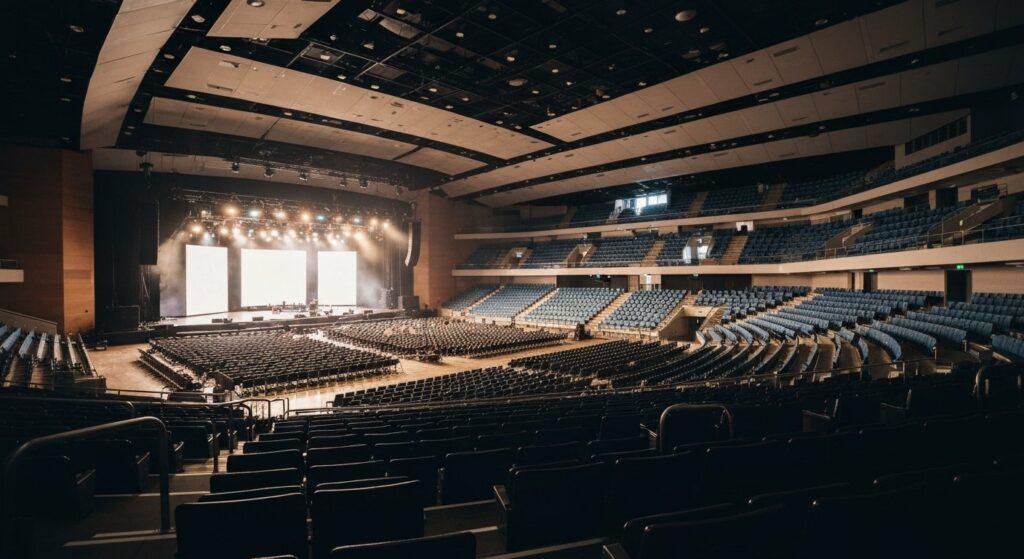
Key Details / TL;DR
General admission is standing and immersive, often first-come for the best spots; seated guarantees a specific spot and a rest. Choose GA for high-energy shows and closeness, seated for longer or theatrical shows and comfort.
When you buy concert tickets, one of the first choices is general admission (GA) or seated. Neither is better; they suit different nights and different people.
General admission
GA is usually standing, often first-come for the best spots near the stage. It is energetic and immersive — great for high-energy shows and being close to the action. The trade-offs: you may queue early, stand for hours, and have no guaranteed spot.
Seated
A seated ticket guarantees a specific spot and a place to rest, with a predictable view. It suits longer shows, anyone who prefers not to stand, and events where you want to see the whole stage. The trade-off is less flexibility and, sometimes, more distance from the stage.
How to choose
Think about the artist and the night: a dance-heavy show rewards GA; a theatrical or seated-format concert rewards a good seat. Consider stamina, who you are with, and the venue’s layout — venue seating maps are your friend. Whichever you pick, buy from an official or reputable source; see our ticket-buying guide.
Reading a venue seating map
Before you buy seated, spend a minute with the venue’s seating map. “Lower” tiers are closer and pricier; “upper” tiers trade proximity for a full view of the stage and production, which for a big theatrical show can actually be better. Watch for restricted-view seats and side sections behind the stage, which are usually cheaper for a reason.
The GA trade-off, honestly
GA rewards commitment: arrive early, expect to queue, and be ready to stand for hours to hold a front spot. If that sounds like your idea of a great night, it is unbeatable for closeness and energy. If it sounds exhausting, that is your answer — and a good seat you can sink into is not a lesser experience, just a different one.
Special cases
Some tours offer premium packages, pit or floor upgrades, or early entry — useful if closeness matters and you want to skip the queue, but check what you actually get for the premium. Whatever you choose, buy from an official or reputable seller; see our ticket-buying guide.
Reading a venue seating map
Before you buy seated, spend a minute with the venue’s seating map. “Lower” tiers are closer and pricier; “upper” tiers trade proximity for a full view of the stage and production, which for a big theatrical show can actually be better. Watch for restricted-view seats and side sections behind the stage, which are usually cheaper for a reason.
The GA trade-off, honestly
GA rewards commitment: arrive early, expect to queue, and be ready to stand for hours to hold a front spot. If that sounds like your idea of a great night, it is unbeatable for closeness and energy. If it sounds exhausting, that is your answer — and a good seat you can sink into is not a lesser experience, just a different one.
Special cases
Some tours offer premium packages, pit or floor upgrades, or early entry — useful if closeness matters and you want to skip the queue, but check what you actually get for the premium. Whatever you choose, buy from an official or reputable seller; see our ticket-buying guide.
General admission, decoded: the variations you will meet
The phrase general admission hides a surprising amount of variety, and knowing which flavour you are buying changes how you plan your night. At its simplest, GA means an unreserved space rather than a numbered seat, but venues apply that idea in very different ways. The classic version is a standing floor, where the whole area in front of the stage is open and you position yourself wherever there is room. A GA pit is a smaller, often barriered zone right at the front, sometimes sold as a separate premium tier for people who want to be closest to the action. At outdoor shows you may instead find a GA lawn or field, where you spread a blanket or bring a low chair and enjoy a more relaxed, picnic-style atmosphere.
Entry style matters just as much as the space itself. Many events run first-come, first-served entry, so the earlier you arrive and queue, the better your position. Others use timed or staggered entry, releasing groups in waves to ease congestion, which can level the playing field for latecomers. A growing number of festivals and clubs also use wristbands or app-based check-ins that let you come and go. Reading the small print before the day tells you whether turning up early is genuinely rewarded or simply unnecessary.
Reserved seating and how tiers actually work
With reserved seating, sometimes called allocated or seated tickets, you are assigned a specific section, row and seat number that is yours for the night. Venues typically divide the room into tiers or price bands that reflect proximity and viewing angle. Front stalls or lower tiers tend to be the priciest because they are closest; middle bands often balance cost against a clean, elevated view; and upper or rear tiers are usually the gentlest on your budget while still offering a complete picture of the stage and production. Boxes, balconies and side blocks each carry their own character, and many venues label premium or restricted-view seats clearly so you know what you are choosing.
Because the layout is fixed, seated tickets reward a little homework. Beyond the price band, pay attention to how central your section is, whether a row sits behind a barrier or walkway that adds legroom, and how steep the rake is, since a well-raked tier means the head in front rarely blocks your view.
Weighing it up across different event types
The right choice often depends more on the kind of event than on personal preference alone.
- Concerts: high-energy, dance-led shows come alive on a GA floor, while singer-songwriter or orchestral evenings often feel richer from a comfortable seat.
- Festivals: these are usually GA by nature, with the freedom to roam between stages, though some offer seated or raised viewing areas as an upgrade.
- Theatre: almost always reserved seating, where sightlines and acoustics are carefully considered and a numbered seat is part of the experience.
- Sport: frequently seated for safety and crowd management, with sections aligned to the pitch or court so you can follow the play.
- Comedy: often seated in smaller rooms, though club nights and larger tours vary, so check whether tables or rows are allocated.
Who each option suits best
General admission tends to suit dedicated fans who want to be at the barrier, groups happy to arrive early together, and anyone who thrives on the energy of a standing crowd. Reserved seating suits families who want to stay together, people who prefer a guaranteed spot without queueing, and anyone who values being able to sit, rest and see the whole stage. If comfort, predictability or a clear view of the full production matters most to you, a seated ticket is rarely the wrong call. If closeness and atmosphere are everything, GA is hard to beat.
Tips for getting a good spot in GA
If you have chosen general admission and want a strong position, a few habits help enormously. Arrive with time to spare and check where the queue actually forms, as it is not always at the main entrance. Travel light, since many venues limit bag sizes and every extra item slows you at security. Wear comfortable shoes and layers you can manage while standing, and stay hydrated throughout. Agree a meeting point with your group in case you become separated, and keep an eye on where the nearest exits and stewards are. Above all, be considerate of those around you; a good GA crowd looks after each other.
Accessibility considerations
Accessibility deserves early attention whichever ticket type you are weighing. Many venues offer dedicated accessible viewing platforms, step-free routes, and companion or personal-assistant tickets, and these often need to be arranged directly with the venue rather than through a general sale. If standing for long periods is difficult, a seated ticket or an accessible platform usually gives a far more comfortable and predictable experience than an open floor. It is worth contacting the venue’s access team ahead of time to ask about seating locations, sightlines from accessible areas, nearby facilities and any documentation they require. Booking early tends to give you the widest choice of suitable spaces.
How to decide with confidence
When you are torn, picture the night you actually want. If you imagine yourself dancing, singing along and being swept up in the crowd, general admission will deliver that. If you picture settling in, seeing every detail and simply enjoying the show without a queue, reserved seating is your friend. Factor in who you are attending with, how long the event runs, your stamina on the day, and the venue’s layout. There is no universally superior option, only the one that fits this event and this version of you.
Frequently asked questions
Is general admission always standing?
Not necessarily. While many GA areas are standing floors or pits, others are lawns or fields where seating on the ground is welcome, and some seated venues sell unreserved seating as GA. Always check the ticket details so you know what to expect.
Are seated tickets more expensive than general admission?
It varies widely. Front GA or pit areas can be among the priciest options at a show, while upper-tier seats are often the most affordable. Price usually reflects proximity and demand rather than the ticket type alone, so compare specific sections rather than assuming one is always dearer.
Can I bring a chair to a GA event?
It depends entirely on the venue and event type. Outdoor lawn areas often permit low folding chairs or blankets, whereas indoor standing floors and pits generally do not. Check the venue’s guidance before you travel to avoid being turned away with unpermitted items.
What if I have accessibility needs but want to be near the stage?
Contact the venue’s access team as early as possible. Many offer accessible viewing areas with good sightlines, and some can advise on the closest suitable options for your needs. Booking ahead usually gives you the best chance of a spot that balances access and proximity.
