
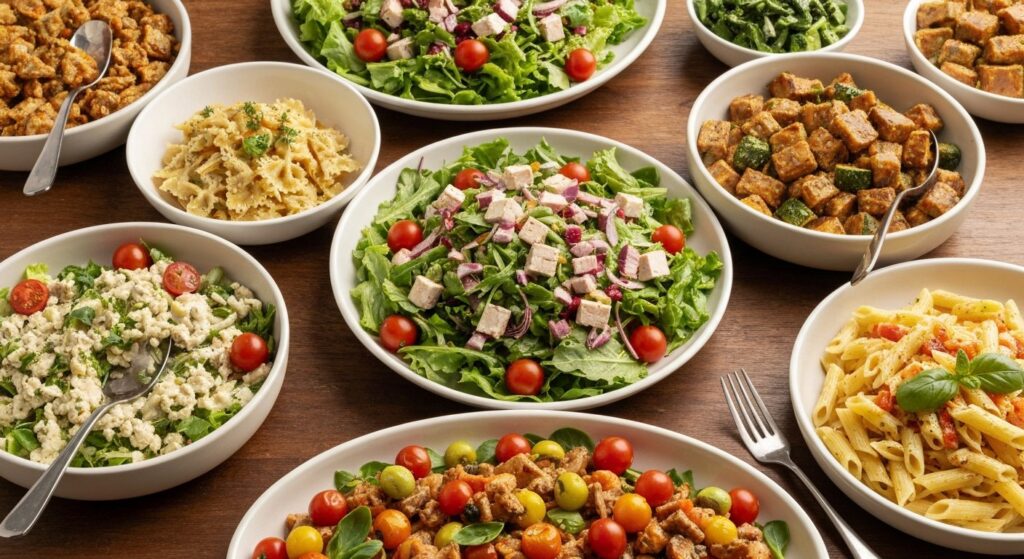
Key Details / TL;DR
Cater for dietary needs by collecting requirements with RSVPs, briefing your caterer early, labelling dishes clearly, taking allergies and cross-contamination seriously, and offering good non-alcoholic options.
Catering that looks after everyone — not just the majority — is a mark of a well-run event. Handling dietary needs is straightforward if you plan for it early.
Collect requirements early
Ask about dietary needs with your RSVPs, not at the door. Cover the common ones: vegetarian, vegan, gluten-free, nut and other allergies, and cultural or religious requirements such as halal or kosher.
Brief your caterer clearly
Give your caterer the full list well ahead of the event. A good caterer builds inclusive options into the main menu so guests with dietary needs are looked after as a matter of course — not handed a sad afterthought plate.
Label everything
Clearly label dishes at buffets and stations, and make sure service staff know what is in each dish. For serious allergies, take cross-contamination seriously and confirm how the kitchen manages it.
Offer good non-alcoholic options too
Inclusivity extends to drinks. Interesting non-alcoholic options make non-drinking guests feel considered. See our full event catering guide for the bigger picture.
The categories to plan for
Build your plan around the common needs: vegetarian and vegan; gluten-free and other allergen-free (nuts, dairy, shellfish, eggs); and cultural or religious requirements such as halal or kosher. The two questions that matter are “what can this guest eat?” and, for allergies, “what must never touch their food?”
Design inclusive dishes, not afterthoughts
The best catering makes the standard menu quietly work for as many people as possible — naturally vegan sides, clearly separated dishes — so guests with dietary needs are not handed a lonely, obviously “special” plate. Ask your caterer to build inclusivity into the main menu rather than bolting it on.
Labelling and allergy safety
Label every dish at buffets and stations, and make sure serving staff know the ingredients. For serious allergies, ask the caterer directly how they prevent cross-contamination in the kitchen and at service — it is a fair, expected question, and a good caterer will have a clear answer. See our full event catering guide.
The categories to plan for
Build your plan around the common needs: vegetarian and vegan; gluten-free and other allergen-free (nuts, dairy, shellfish, eggs); and cultural or religious requirements such as halal or kosher. The two questions that matter are “what can this guest eat?” and, for allergies, “what must never touch their food?”
Design inclusive dishes, not afterthoughts
The best catering makes the standard menu quietly work for as many people as possible — naturally vegan sides, clearly separated dishes — so guests with dietary needs are not handed a lonely, obviously “special” plate. Ask your caterer to build inclusivity into the main menu rather than bolting it on.
Labelling and allergy safety
Label every dish at buffets and stations, and make sure serving staff know the ingredients. For serious allergies, ask the caterer directly how they prevent cross-contamination in the kitchen and at service — it is a fair, expected question, and a good caterer will have a clear answer. See our full event catering guide.
A closer look at catering for dietary requirements
Once you accept that dietary restrictions are a normal part of any guest list, the job becomes calmer. Most events include a mix of allergies, medical needs, ethical choices and cultural or religious requirements, and each deserves the same quiet care. This section digs into the practical mechanics of catering for dietary requirements so no guest is left picking around a plate.
Understanding the main categories
It helps to think in broad groups, while remembering that individuals within each group can differ enormously.
- Food allergies and intolerances. Common ones include peanuts, tree nuts, milk, eggs, fish, shellfish, soya, sesame and certain grains. Reactions range from mild discomfort to serious, life-threatening episodes, so these are never a matter of preference. Always defer to what the individual guest tells you they can and cannot have.
- Coeliac disease and gluten-free needs. For someone with coeliac disease, even a trace of gluten can cause harm, which makes cross-contact a genuine concern rather than a technicality.
- Vegetarian and vegan diets. Vegetarians typically avoid meat and fish; vegans also avoid dairy, eggs, honey and other animal-derived ingredients. Check hidden items such as gelatine, certain cheeses and some stocks.
- Dairy-free requirements. These may stem from a milk allergy, lactose intolerance or a personal choice, and each carries a different level of strictness.
- Religious and cultural requirements. Needs such as halal or kosher food, or avoidance of particular ingredients during observances, should be treated with respect and taken as seriously as any other requirement. If you are unsure what a requirement involves, ask the guest politely rather than guessing.
How to collect requirements from guests
Good information gathering does most of the work for you. Build a simple, non-judgemental question into your invitation or RSVP form, and give people room to explain. A line such as “Please tell us about any allergies, intolerances or dietary requirements so we can look after you” works well because it invites detail without making anyone feel awkward.
- Set a clear RSVP deadline that gives your caterer enough lead time, and say why it matters.
- Offer a free-text box rather than tick-boxes alone, since real needs rarely fit neat categories.
- For allergies, ask about severity and whether the guest carries their own medication, so your team knows what to watch for.
- Keep a master list and share it with your caterer and venue, updating it as late responses arrive.
Menu design that makes inclusion easy
The most elegant approach is to design a menu where inclusion is built in from the start. When several dishes are naturally free from common allergens, guests with dietary requirements can eat from the same spread as everyone else. Aim for a range of clearly distinct options, keep sauces and dressings on the side, and avoid garnishes that hide allergens. A menu planned this way is simpler to serve and reduces the number of one-off “special” plates.
Labelling and reducing cross-contamination
Clear labelling is one of the kindest things you can do. Name each dish and list the major allergens it contains, using consistent wording so guests can scan quickly. Brief your service staff so they can answer questions and know who to fetch if unsure.
For guests with serious allergies or coeliac disease, cross-contamination is where risk really lives. This is a kitchen and service matter, so raise it directly with your caterer rather than trying to manage it yourself. Ask how they separate preparation areas, utensils and serving spoons, and how they keep allergen-free dishes apart on the day. No responsible caterer will be offended by these questions.
Buffet versus plated service
Your service style affects safety as well as atmosphere. A buffet is sociable and flexible, but shared serving spoons and closely packed dishes can raise the risk of cross-contact, and labels can drift out of place as the meal goes on. If you choose a buffet, consider plating allergy-sensitive meals separately and bringing them out directly to those guests.
A plated service gives you far more control, because each meal is assembled in the kitchen and matched to a named guest. Many planners use a discreet system, such as a marked place setting or a quiet word from the caterer, so the right plate reaches the right person without any fuss. Neither style is automatically better; the point is to choose consciously and adapt it to the needs on your list.
Briefing your caterer and the questions to ask
Give your caterer the full picture early and treat them as a partner. Useful questions include how they handle severe allergies, whether they can accommodate combined requirements such as vegan and gluten-free together, how they label dishes, and their plan if a need is flagged late. Ask them to walk you through service on the day so you can picture how allergy plates will reach guests.
Handling last-minute needs on the day
However well you plan, someone will occasionally mention a requirement late or realise a dish will not work for them. Agree a simple fallback with your caterer in advance, such as a couple of adaptable dishes held in reserve. Brief a named point of contact so staff know exactly who to ask, and encourage guests to speak up if anything is unclear. Calm, honest handling in the moment matters far more than pretending nothing has changed.
A practical planning checklist
- Ask about dietary requirements on the invitation, with a clear deadline.
- Keep a running master list and update it as replies come in.
- Share the full list with your caterer and venue well ahead of time.
- Design a menu with naturally inclusive options built in.
- Confirm how allergens and cross-contamination will be managed.
- Decide whether buffet or plated service suits your guest list.
- Label dishes clearly and brief your service team.
- Agree a fallback plan and a named contact for the day.
Frequently asked questions
How far in advance should I ask about dietary requirements?
Ask as early as the invitation stage and set an RSVP deadline that gives your caterer comfortable lead time. Earlier information means more thoughtful options and fewer rushed adjustments, though you should always allow for a few late updates.
Can I promise a guest that a dish is safe for their allergy?
It is wiser to avoid absolute promises. Instead, share exactly what is in a dish and how it was prepared, and let the guest make their own decision. For serious allergies, confirm the details with both the guest and your caterer rather than reassuring anyone on your own.
Is a buffet a bad idea if guests have allergies?
Not necessarily, but it does need more care because of shared utensils and closely placed dishes. Many planners keep the buffet for most guests while plating allergy-sensitive meals separately, which combines a relaxed atmosphere with better control.
What should I do if someone raises a requirement on the day?
Stay calm and turn to the fallback plan you agreed with your caterer. Direct the guest to your named point of contact, be honest about what can and cannot be adapted, and focus on finding a genuinely suitable option rather than a token gesture.
