
Key Details / TL;DR
Plan a holiday party six to eight weeks ahead because venues, caterers, and dates fill fast in the season. Set a light festive tone, plan inclusive food and good non-alcoholic options, and mind winter weather and guests getting home safely.
Holiday parties — end-of-year gatherings, festive dinners, New Year celebrations — carry extra expectation and extra competition for your guests’ calendars. Plan a little earlier and a little smarter, and the season’s party runs itself.
Book early — the season fills fast
Everyone is hosting in the same few weeks, so venues, caterers, and dates go quickly. If you want a specific date or venue during the holidays, plan six to eight weeks ahead (more for a workplace party), and send invitations early because guests’ diaries fill.
Set the tone
Decide whether it is a relaxed gathering, a formal dinner, or a big celebration, and let a light festive theme — colours, seasonal food, warm lighting — carry the mood without heavy effort. Cosy and well-lit beats over-decorated.
Food, drink, and inclusivity
Match the food to the time and formality, over-cater the easy crowd-pleasers, and offer genuinely good non-alcoholic options — the season is not only for drinkers, and many guests are driving. Account for dietary needs, as our dietary catering guide explains.
Mind the logistics
Winter weather and busy transport complicate arrivals and departures, so share clear timing and travel information, and consider how guests will get home safely. A little thought here is the difference between a warm evening and a stressful one.
Keep it joyful
The point of a holiday party is connection, not perfection. Prep ahead, keep a loose run of show, and be a present host. Our party planning guide has the full framework.
Timing in a crowded season
Everyone competes for the same December weekends, so the earlier you commit a date and send invitations, the better your turnout. Consider a slightly off-peak slot — an early-December date, a weeknight, or even a January “new year” gathering — when venues are easier and guests are less stretched. For workplace parties, poll key dates before you book anything.
Festive without the effort
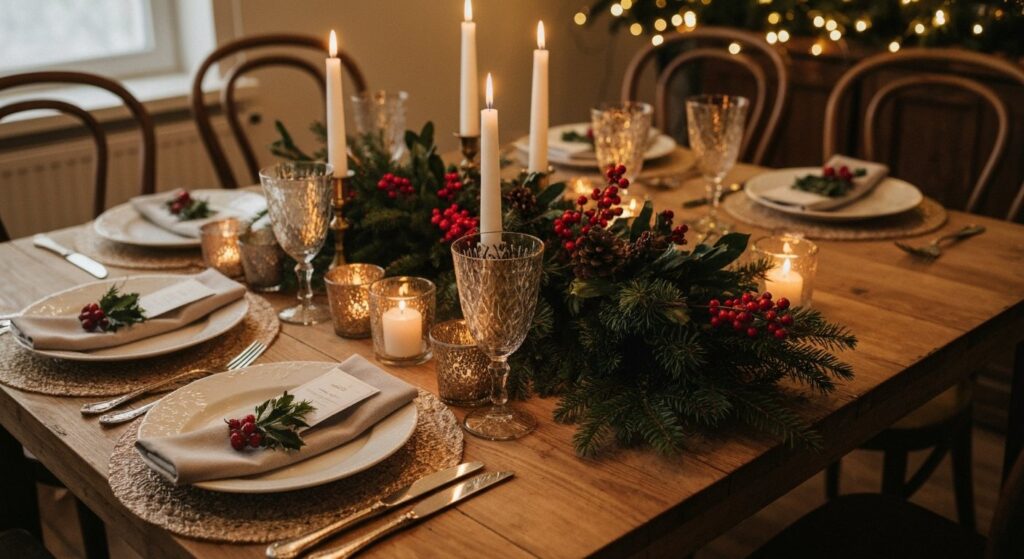
You do not need to transform a room. Warm, low lighting (candles, string lights, lamps), a seasonal scent, a festive playlist, and a signature warm drink do more for the mood than wall-to-wall decorations. Pick one or two festive touches and do them well.
Inclusive food, safe journeys home
Cater for the whole crowd: crowd-pleasing food, genuinely good non-alcoholic options for drivers and non-drinkers, and clearly-labelled dishes for dietary needs. Because winter weather and busy transport complicate the trip home, share timing and travel details, and think about how guests will get back safely. Our party planning guide covers the rest.
Timing in a crowded season
Everyone competes for the same December weekends, so the earlier you commit a date and send invitations, the better your turnout. Consider a slightly off-peak slot — an early-December date, a weeknight, or even a January “new year” gathering — when venues are easier and guests are less stretched. For workplace parties, poll key dates before you book anything.
Festive without the effort
You do not need to transform a room. Warm, low lighting (candles, string lights, lamps), a seasonal scent, a festive playlist, and a signature warm drink do more for the mood than wall-to-wall decorations. Pick one or two festive touches and do them well.
Inclusive food, safe journeys home
Cater for the whole crowd: crowd-pleasing food, genuinely good non-alcoholic options for drivers and non-drinkers, and clearly-labelled dishes for dietary needs. Because winter weather and busy transport complicate the trip home, share timing and travel details, and think about how guests will get back safely. Our party planning guide covers the rest.
Choosing the type of holiday party that suits you
Before anything else, decide what kind of gathering you are actually hosting, because the format shapes every later decision. A cosy home gathering tends to be intimate and low-pressure, ideal for close friends and family. An office or work party usually carries more expectation around fairness, inclusivity, and clear timing, so it often benefits from a small planning group rather than a single organiser. A casual friends’ get-together can lean on shared contributions and a relaxed run of the evening, while a neighbourhood or community celebration may need wider consultation, a larger space, and a warm welcome for people who do not all know each other. When you learn how to plan a holiday party, naming the type first tends to make budget, guest list, and venue fall into place far more easily.
Setting a realistic budget and guest list
Your budget and your guest list are closely linked, so it usually helps to sketch both together. Rather than fixing an exact figure, think in proportions: roughly how much of your budget should go towards food and drink, how much towards the space, and how much towards small extras such as decorations or activities. Food and drink typically take the largest share, so decide that first and let the rest follow.
For the guest list, start with the people who matter most and expand outwards only as far as your space and budget comfortably allow. A few practical prompts can help:
- Capacity: how many people can your space seat or hold comfortably, not just at a squeeze?
- Mix: will the group blend easily, or will you need to help people connect?
- Plus-ones and children: decide your policy early and state it clearly on the invitation to avoid awkwardness later.
Keeping the list a little smaller than your maximum often makes for a warmer, less stretched evening.
Invitations that work in a busy season
Because diaries fill quickly around the holidays, your invitation should do more than name a date. Aim to include the type of event, a clear start and rough finish time, any dress code or theme, and a simple way to reply. A gentle RSVP deadline gives you time to adjust catering and seating, and a friendly nudge a week or so beforehand is usually welcome rather than pushy. If your gathering welcomes contributions — a dish, a drink, or a small gift for an exchange — say so plainly so guests know what to expect.
Venue and space planning
Whether you are hosting at home or booking somewhere, think about how people will actually move and mingle. Create a natural flow between where guests arrive, where food and drink live, and where they can sit or stand and talk. Try to avoid a single bottleneck around the food table, and keep a clear path to coats, bathrooms, and the exit.
Consider these often-overlooked details:
- Coats and bags: in colder months guests arrive bundled up, so plan somewhere to put layers.
- Seating balance: a mix of seats and standing space suits most gatherings better than rigidly seating everyone.
- Warmth and airflow: a room fills and warms quickly, so think about ventilation as well as heating.
- Quiet corner: a slightly calmer spot gives anyone who needs a breather somewhere to go.
Decor, ambience, and music
Ambience is less about spending and more about layering a few senses thoughtfully. Lighting sets the mood most powerfully, so soften harsh overhead lights wherever you can. For sound, build a playlist that shifts with the evening — gentler as people arrive and eat, livelier later if the mood calls for it — and keep the volume low enough that conversation flows easily. A single considered centrepiece or a warm scent often does more than scattering decorations across every surface.
Activities, games, and gift exchanges
You do not need to fill every minute, but a light, optional activity can help a mixed group relax. Choose things that are easy to join and easy to leave, so no one feels trapped or excluded. Simple conversation-starters, a low-key quiz, or a shared toast can lift the energy without dominating the night.
Gift exchanges are a popular holiday tradition and work best with clear, gentle rules. If you run one, agree in advance on a rough spending guide, whether gifts are humorous or heartfelt, and how the exchange will run, so everyone feels comfortable taking part — and make it genuinely optional for those who would rather not.
Being inclusive of different traditions and needs
The winter season holds many different celebrations, so an inclusive holiday party welcomes everyone rather than assuming a single tradition. Keep language and decoration broadly festive rather than tied to one specific holiday unless your whole group shares it, and be mindful that not everyone celebrates in the same way, or at all. On the practical side, ask about dietary needs and allergies in advance, label dishes clearly, and always offer appealing non-alcoholic choices. Small acts of thoughtfulness — a step-free route, a quieter corner, flexible timing — tend to make far more people feel genuinely welcome.
A simple countdown checklist
A loose timeline keeps the season’s pressure manageable. Adapt the following to your own event:
- Several weeks ahead: confirm the type of party, set your budget, draft the guest list, and secure the date or venue.
- A few weeks ahead: send invitations, plan the menu, and note dietary needs as replies arrive.
- The week before: finalise numbers, shop for non-perishables, prepare a playlist, and plan your space layout.
- The day before: prepare what you can in advance, set out serveware, and sort lighting and decorations.
- On the day: keep a loose run of show, welcome guests warmly, and give yourself permission to relax and enjoy it.
Frequently asked questions
How far in advance should I start planning a holiday party?
As a general guide, giving yourself several weeks tends to help, and a little longer for larger or workplace gatherings, because the season is busy and popular dates go quickly. The earlier you settle the date and send invitations, the more likely people are to be free.
How do I keep costs sensible?
Focus your budget on what guests notice most — usually food, drink, and a warm atmosphere — and be willing to keep decorations simple. Shared contributions, a smaller guest list, or an off-peak date can all ease the pressure without dimming the mood.
How can I make sure everyone feels included?
Ask about dietary needs early, offer genuinely good non-alcoholic options, keep decoration and language broadly festive rather than tied to one tradition, and make any activities optional. Thoughtful, low-key inclusivity usually helps more people feel at ease.
What if I am not a confident host?
Keep things simple and prepare as much as you can in advance so you are free to be present on the night. Guests generally remember a warm, relaxed welcome far more than any detail that did not go exactly to plan.
